
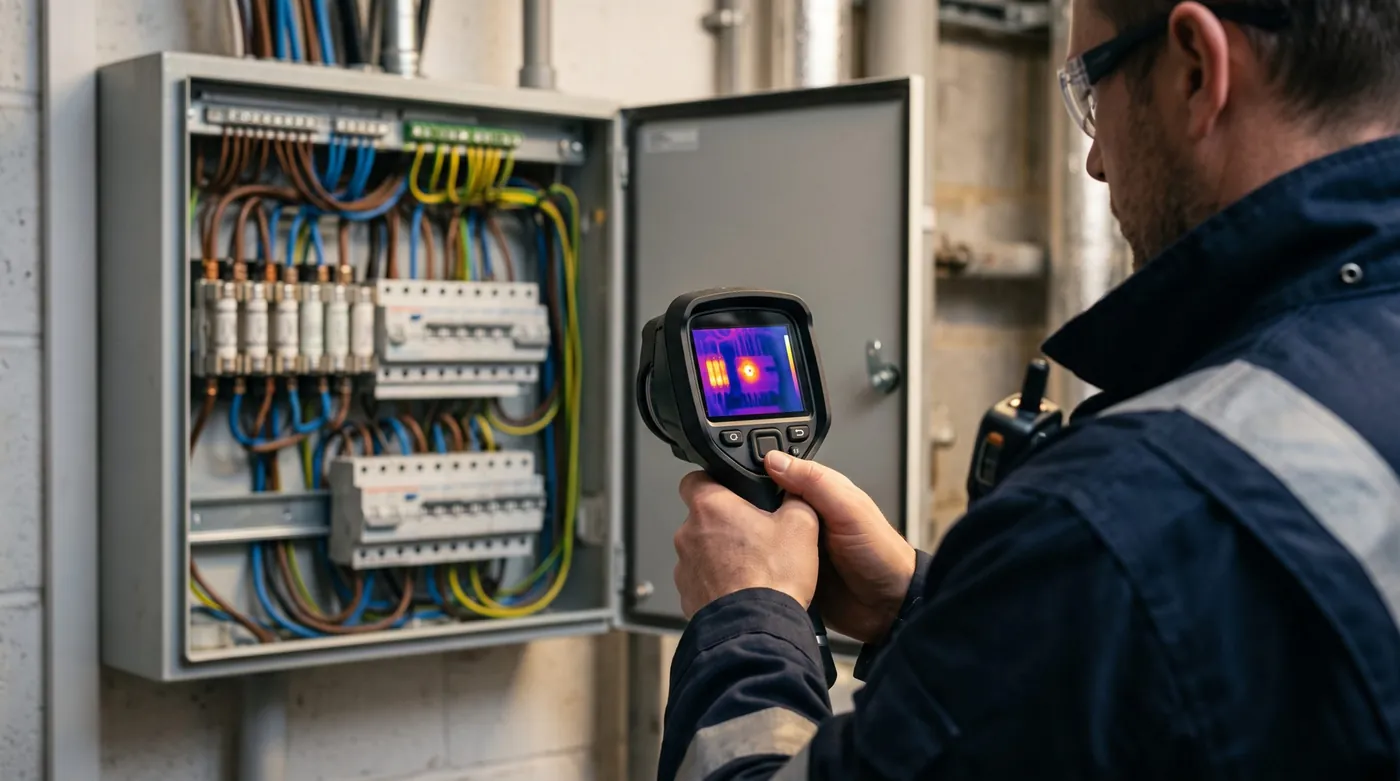
What is an EICR?
An Electrical Installation Condition Report (EICR) is a formal inspection and test of the fixed wiring in a property. It covers the consumer unit or distribution boards, cables, sockets, switches, lighting circuits, earthing and bonding, and the protective devices on each circuit. The report records the condition of the installation and any defects found.
Who needs an EICR and how often
- Landlords: privately rented homes in England must be inspected and tested at least every five years, and a copy given to tenants
- Homeowners: an EICR is recommended every ten years, and when you buy a property or notice signs of wear
- Businesses: a five year interval is typical for commercial premises, and some insurers or leases ask for more frequent testing
- Landlords of commercial units: tenants and lenders often ask for a current report at lease events
What the codes mean
- C1: danger present. Immediate action is required
- C2: potentially dangerous. Urgent action is required
- C3: improvement recommended
- FI: further investigation required
A report with any C1 or C2 observations, or an FI that is unresolved, is classed as unsatisfactory. We explain every observation in plain English and tell you which ones matter most.
What happens after the report
If the report is satisfactory you receive the certificate and the date for your next inspection. If it is not, we give you a clear quote for the remedial work and can carry it out, then issue the certificates that prove the installation is now safe.
EICRs for commercial premises
Testing means switching circuits off briefly, so for offices, shops and industrial units we plan the inspection around how your business operates. We can also combine the EICR with PAT testing and planned maintenance.