
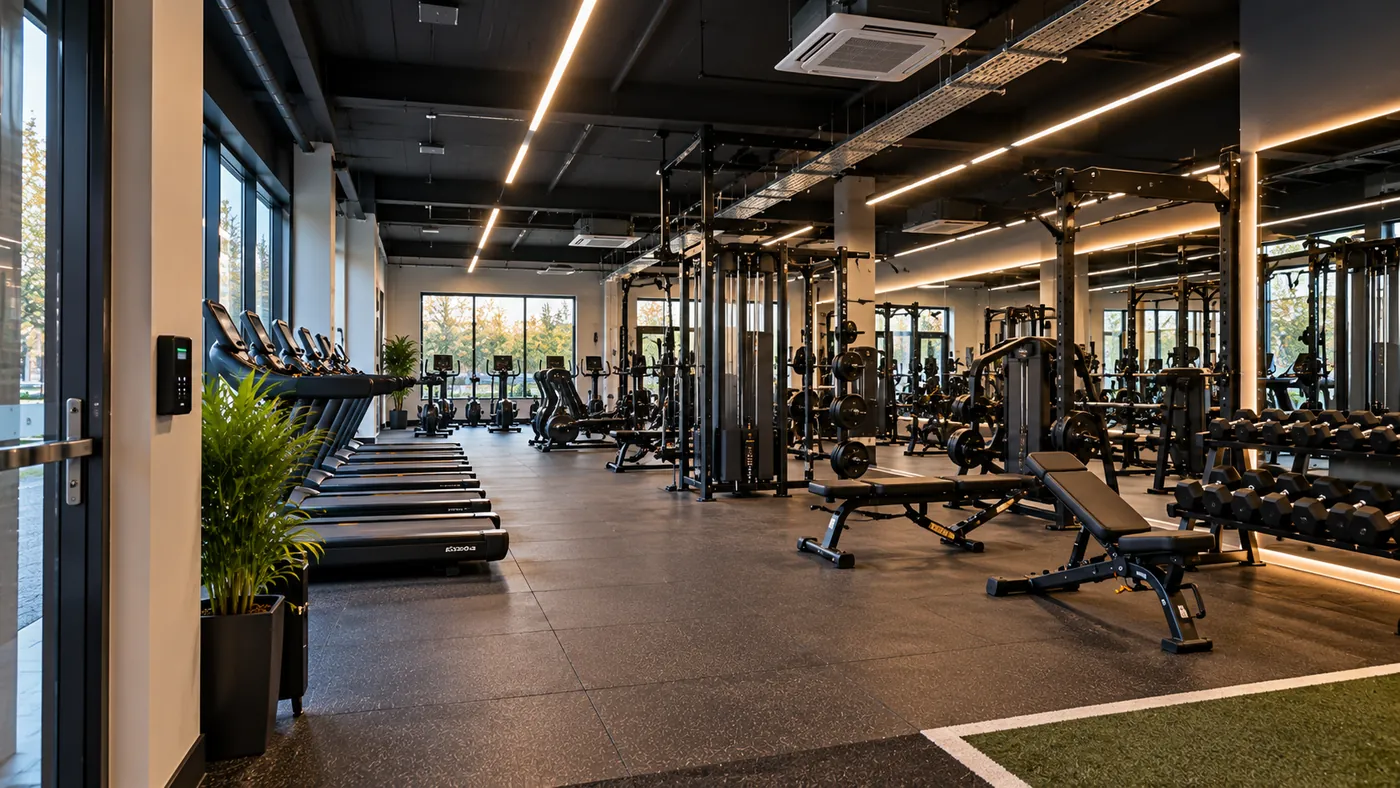
A gym electrical installation is one of the more demanding jobs in small commercial fit out. You have powered equipment running for long hours, heating and cooling to manage a hot space, showers, changing rooms and members who expect good lighting, music and smooth access.
If you are opening an independent gym, boxing club or fitness studio, these eight steps show what the electrical side should cover.
What does a gym electrical installation include?
A gym electrical installation covers power for cardio and strength equipment, lighting, air conditioning, water heating, wet areas, access control, audio, screens, emergency lighting and fire alarm connections. All of it must be tested and certified before members arrive.
Because the public will be in the building, safety systems matter as much as performance.
1. Start with the equipment list
Treadmills, cross trainers, bikes with consoles and some strength machines all need power, and the demand adds up faster than most owners expect. List every powered item and ask suppliers for their electrical requirements.
Your electrician can then place circuits and floor or wall outlets where they are needed, instead of leaving you with extension leads across the floor.
2. Check supply and distribution capacity
A busy gym combines equipment, lighting, air conditioning, water heating, music and screens. The existing supply and distribution board must carry the combined load with room to grow.
Ask for a load assessment as part of the survey. If a larger or three-phase supply is needed, begin that enquiry early because network operator timescales can be long. Our three-phase power guide explains what that involves.
3. Plan heating, cooling and ventilation
People generate a lot of heat when they train, so air conditioning and ventilation are essential. These systems can draw significant power and need correctly rated dedicated circuits and isolators.
Agree the specification with your HVAC supplier early so the electrical design can be sized correctly from the start.
4. Design showers and changing rooms carefully
Wet areas need careful electrical design. Electric showers, water heaters, extractor fans, hand dryers and lighting all have specific requirements for zones, IP ratings and RCD protection under BS 7671.
This is where competent design and installation really matter, so make sure your contractor is registered and experienced.
5. Choose lighting and audio to suit the space
Gym lighting should be bright enough for safe training and mirrors, yet still feel energetic rather than clinical. Many gyms use LED linear lighting on the main floor with feature lighting for studios and reception.
Controllable zones are valuable, such as dimmable lighting for a class studio. Decide where audio, screens and timetable displays will go before the walls are finished.
6. Plan access control and security
Many independent gyms offer extended-hours member entry using key fobs, cards or an app. That needs access control with its own power supply, door hardware and a link to the fire alarm so doors release in an emergency.
Add CCTV and an intruder alarm, and your electrician needs to coordinate several systems. Plan cable routes and supplies early so they are not squeezed in later.
7. Cover emergency lighting and fire safety
Emergency lighting on escape routes must be designed and tested to BS 5266, with fire detection suited to the building and your risk assessment. The government's workplace fire safety guidance sets out your responsibilities.
New partitions or studios can change escape routes and detector positions, so involve your electrician and assessor before they are built.
8. Agree the programme and handover
Gym owners usually work to a launch date for memberships and marketing. Agree a simple programme with first fix before plastering and flooring, equipment positions confirmed before second fix, and testing finished well before opening.
At handover, you should receive an Electrical Installation Certificate, test results, a labelled distribution board and a walk-through of isolators and controls. If you have parking, ask your electrician to leave capacity and duct routes for future EV charging.
Choosing a contractor for a gym electrical installation
Look for a registered, insured contractor who is comfortable coordinating with other trades and suppliers. You can verify NICEIC status on the NICEIC register.
Bowers Contracting is NICEIC Approved and works with small business owners across Milton Keynes, Northampton, Bedford, Leighton Buzzard and Newport Pagnell. We provide a clear written scope and full certification on completion.
For more on this approach, read about the brewery electrical installation and the small commercial electrician.
Opening a gym? Call 01908 040 294 or email mike@bowerscontracting.co.uk for a free survey and quotation.