
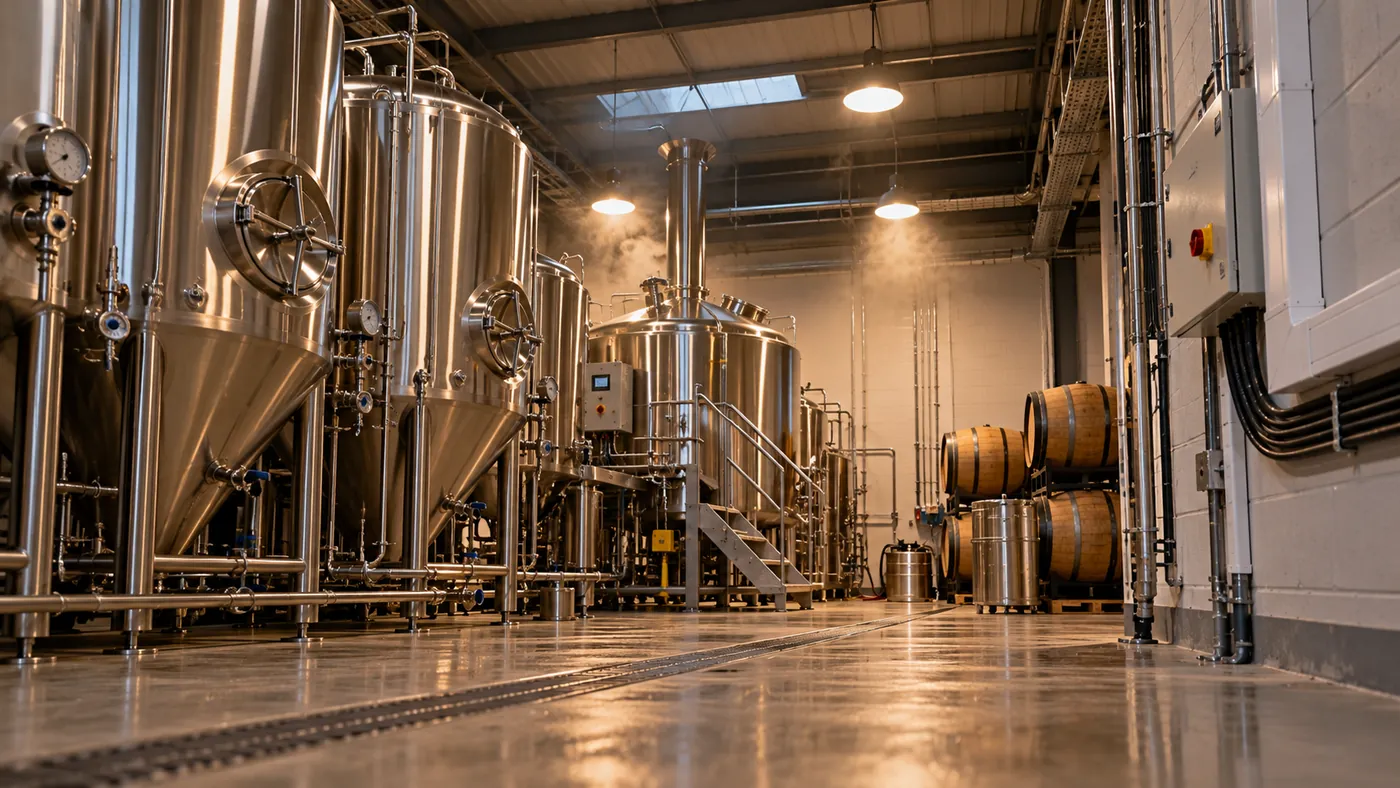
A well planned brewery electrical installation can decide whether your micro-brewery opens on schedule or sits waiting for power. Most of the early planning goes into recipes, equipment and licensing, so the electrics tend to get attention only when the kit arrives and someone asks where it plugs in.
These six tips cover the questions to settle before you order equipment.
What does a brewery electrical installation involve?
A brewery electrical installation supplies power to the brewhouse, boilers, pumps, chillers, cold rooms, packaging equipment, lighting and, if you serve customers, a taproom. It must also stand up to heat, moisture and regular washdown.
That makes it very different from an ordinary office or shop. The design should follow your equipment list, not the other way round.
1. Know your equipment's electrical demands first
Brewing equipment varies a lot. Electrically heated brewhouses, glycol systems, canning lines and cold rooms all draw power, and many are designed for three-phase supply.
Before you commit to a supplier, ask for the full electrical specification of each item, including load, voltage, phases and recommended protection. Your electrician can then size the installation around the true demand instead of guessing.
2. Confirm your supply early
Many industrial and trade units already have three-phase available, but not all do. If your unit is single-phase and your equipment needs three, you will need to apply to the Distribution Network Operator for an upgrade, which can take several weeks or longer. Our three-phase power guide explains the options.
This is often the biggest timing risk, so raise it as soon as you have a lease in prospect. Even where three-phase exists, the distribution board must be correctly sized and balanced across the phases.
3. Design for wet and washdown areas
Breweries are wet places. Floors are hosed down, vessels are cleaned in place and condensation is common. That shapes the whole electrical design:
- Ingress protection. Fittings, sockets and switches should have an IP rating suited to washdown, specified zone by zone.
- RCD protection. Essential wherever water and electricity share a space.
- Robust containment. Suitable cable and containment survive heat, moisture and cleaning chemicals.
- Local isolators. Staff can switch equipment off safely before cleaning or maintenance.
4. Protect refrigeration and fermentation control
Cold rooms, fermentation temperature control and keg storage need dependable power. A refrigeration fault can cost you a whole batch.
Many brewers use separate circuits for critical equipment, clear labelling and, where budget allows, alarms or monitoring so that a failure is noticed quickly.
5. Plan production and taproom lighting and power together
Production areas need bright, even, durable lighting. A taproom needs something different: warmer tones, dimmable zones and feature lighting for the bar.
The bar adds its own load, including dispense cooling, glass washers, tills, audio and signage. Size the supply and distribution board for the whole building, not just the brewhouse.
6. Cover safety, certification and paperwork
A unit that is open to the public or staffed by employees needs emergency lighting designed and tested to BS 5266, plus fire detection based on your risk assessment. The Health and Safety Executive publishes useful guidance on electrical safety at work.
Councils, landlords and insurers may ask for proof that your installation is safe. An Electrical Installation Certificate with test results from a registered contractor is the standard evidence for a new installation.
A sensible order of work
Follow this sequence to keep your project on track:
- Gather electrical specifications from every equipment supplier
- Have your electrician survey the unit and confirm supply capacity
- Apply for any supply upgrade immediately
- Agree the design and layout before groundwork or fit out starts
- Install containment and first fix cabling before equipment is positioned
- Connect, test and certify once equipment is in place
Choosing a contractor
New brewers usually run tight budgets and timelines. Look for a contractor who gives a clear written scope, flags lead times early and works around your other trades. You can verify any contractor's status on the NICEIC register.
Bowers Contracting works with small and growing businesses across Milton Keynes, Northampton, Bedford and the wider area. We are NICEIC Approved, experienced in three-phase and industrial work, and we coordinate the electrics around your equipment delivery dates.
For more on this approach, read about a gym electrical installation and the small commercial electrician.
Planning a brewery or taproom? Call 01908 040 294 or email mike@bowerscontracting.co.uk to arrange a free site survey.